Journal 01
Not Every Space Needs to Invite Many
With this in mind, I intentionally include smaller spaces where children can follow their own thinking, alongside areas that invite collaboration and the exchange of ideas. These spaces may comfortably accommodate only one child, or perhaps two children working alongside each other.
I don't create these spaces because I want fewer children to use them. I create them because I value the kind of experience they make possible.
In these smaller pockets, where children do not have to negotiate every decision within a group, something changes. They can follow their own ideas without needing to explain or defend them. They solve problems in their own way, test theories, change direction halfway through, make mistakes, and try again. Rather than continually responding to someone else’s decisions, they are able to make their own.
Throughout the nursery day, children have countless opportunities to interact with one another. They negotiate ideas, wait for turns, adapt their plans, compromise, and respond to the thinking of others. These are, without doubt, valuable experiences.
But I also wonder whether we sometimes overlook another kind of experience: the opportunity for children to simply ask themselves,
"What do I think?"
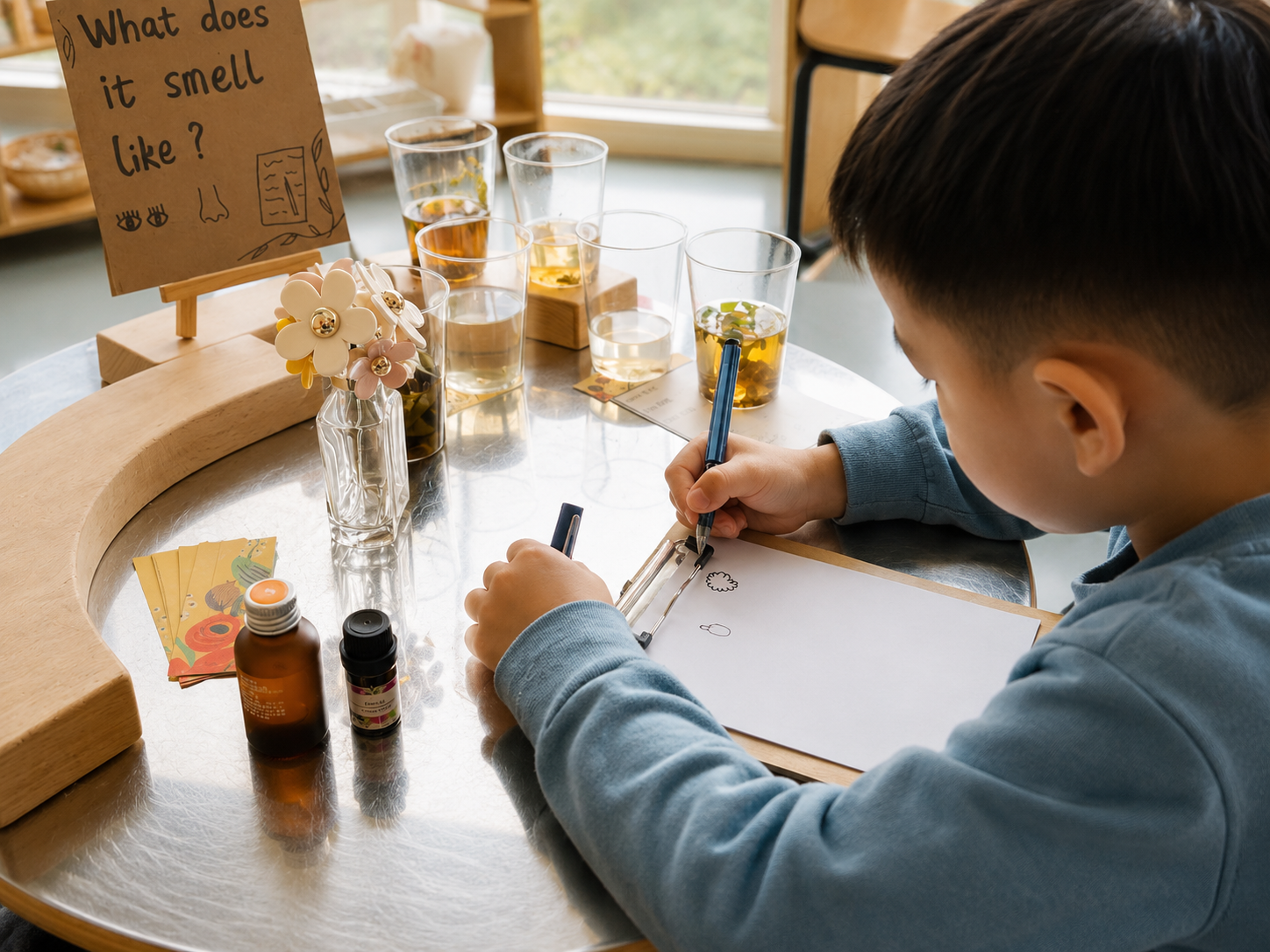
I often think these moments are just as important as collaborative ones.
You may wonder, though, what happens when more children want to use one of these spaces. Because they are intentionally small, they are not always available. Sometimes a child is already deeply engaged, meaning others may need to return later, or even the following day.
I do not see this as a reason to make every space larger. Limited availability is also part of living within a shared environment. Children learn that when a space is occupied, they can return later and, in the meantime, explore something else that interests them. For this to work, however, the rest of the environment also needs to offer meaningful possibilities.
This does not mean every space should be small. Alongside these smaller pockets, I also create areas that naturally invite larger groups, where children share ideas, negotiate, collaborate, and learn together. Both kinds of spaces matter because they offer different possibilities for thinking and learning.
For me, a well-prepared environment is one where every child can find the kind of space they need in that moment. Sometimes that means thinking alongside others. Sometimes it means having enough time and space to discover what they think for themselves.
Joanna, June 2026