Journal 03
Before We Look for Something New
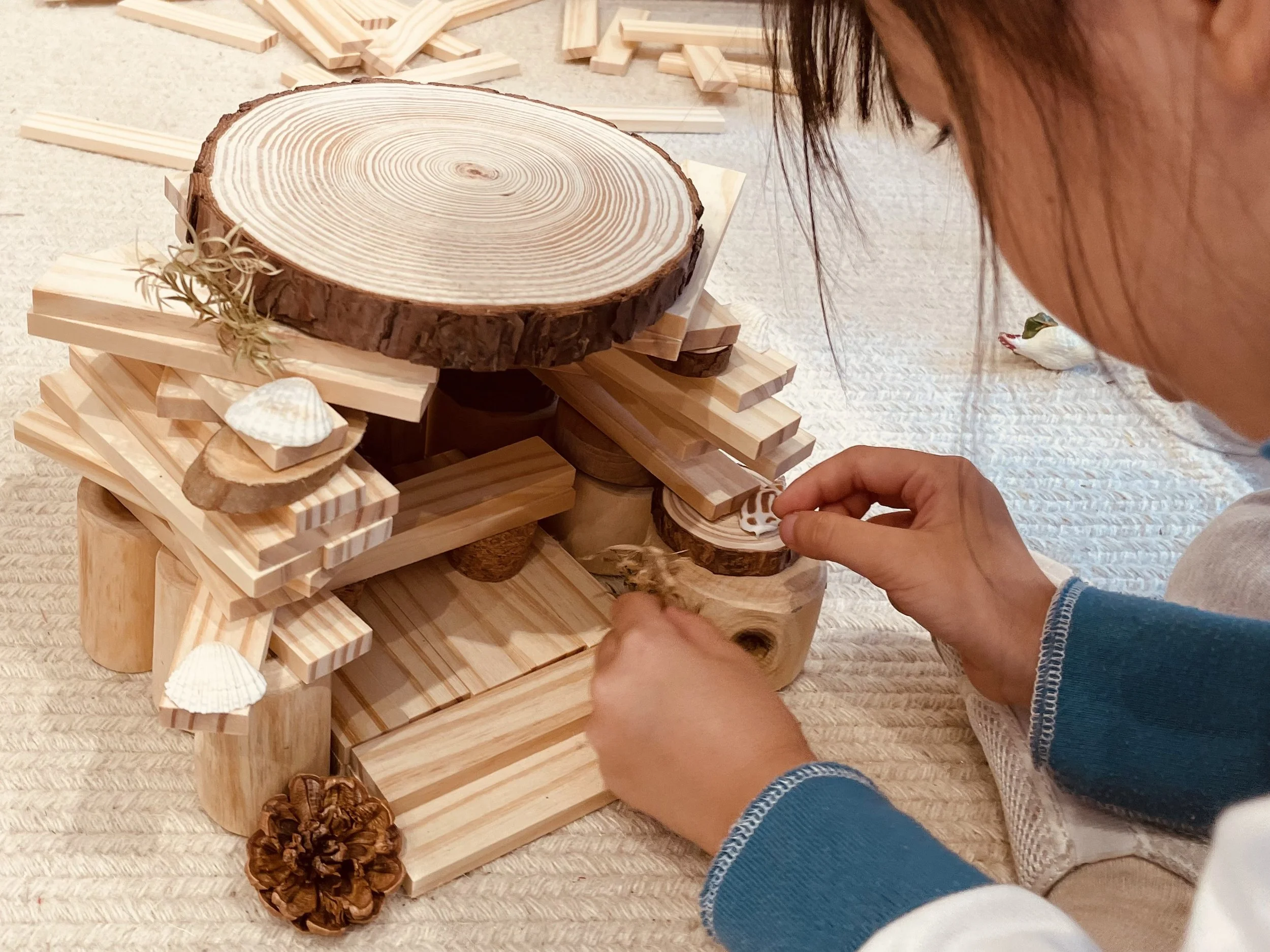
Over the years, through my own practice and working alongside educators in different settings, I have noticed how easily we can feel the need to keep offering children something new. A new activity. A new setup. A new invitation. This pressure does not necessarily come from leaders or anyone else. Often, I think, it comes from ourselves. We worry that children might become bored with an experience they have already encountered. Or maybe introducing something new simply makes us feel that we are doing our job.
But constantly finding something new is exhausting. And so we turn to Instagram or Pinterest for last-minute rescue: What could I set up tomorrow?
I completely understand. I have been there. But the longer I have worked with children, the less I have felt the need to look online for activity ideas. I began to find ideas in my own practice: in the cues the children gave me, in their play and in what was happening around us.
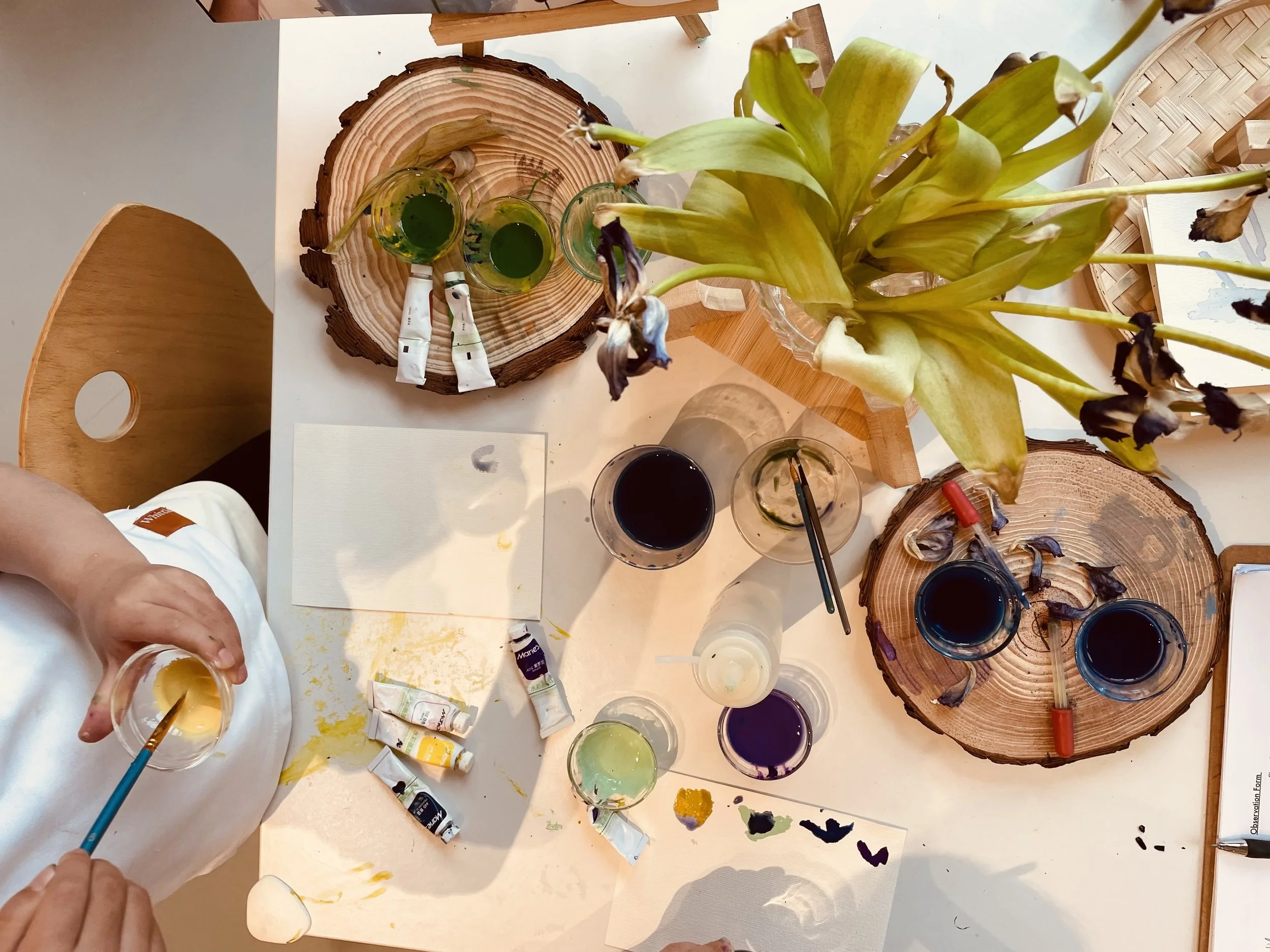
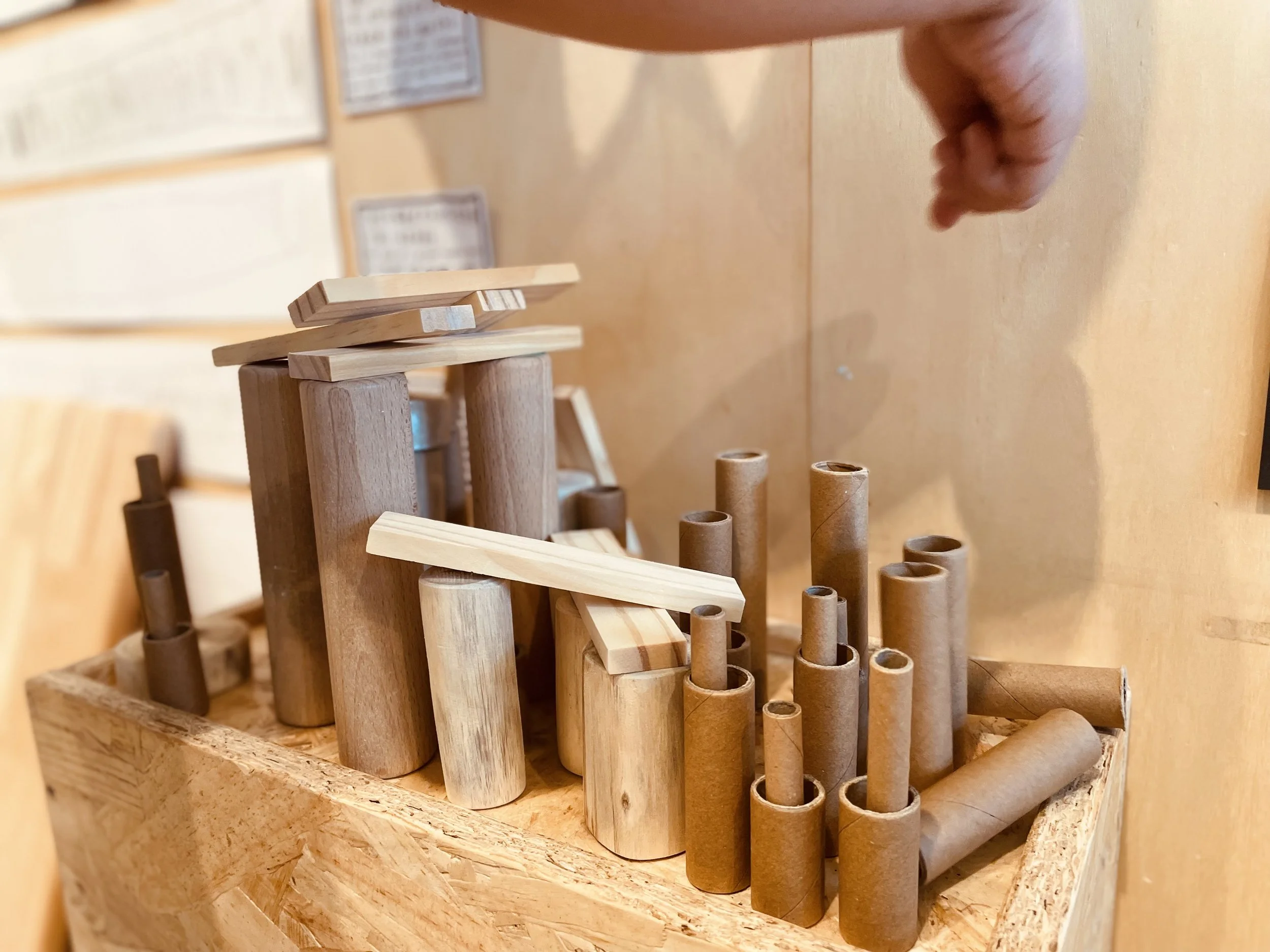
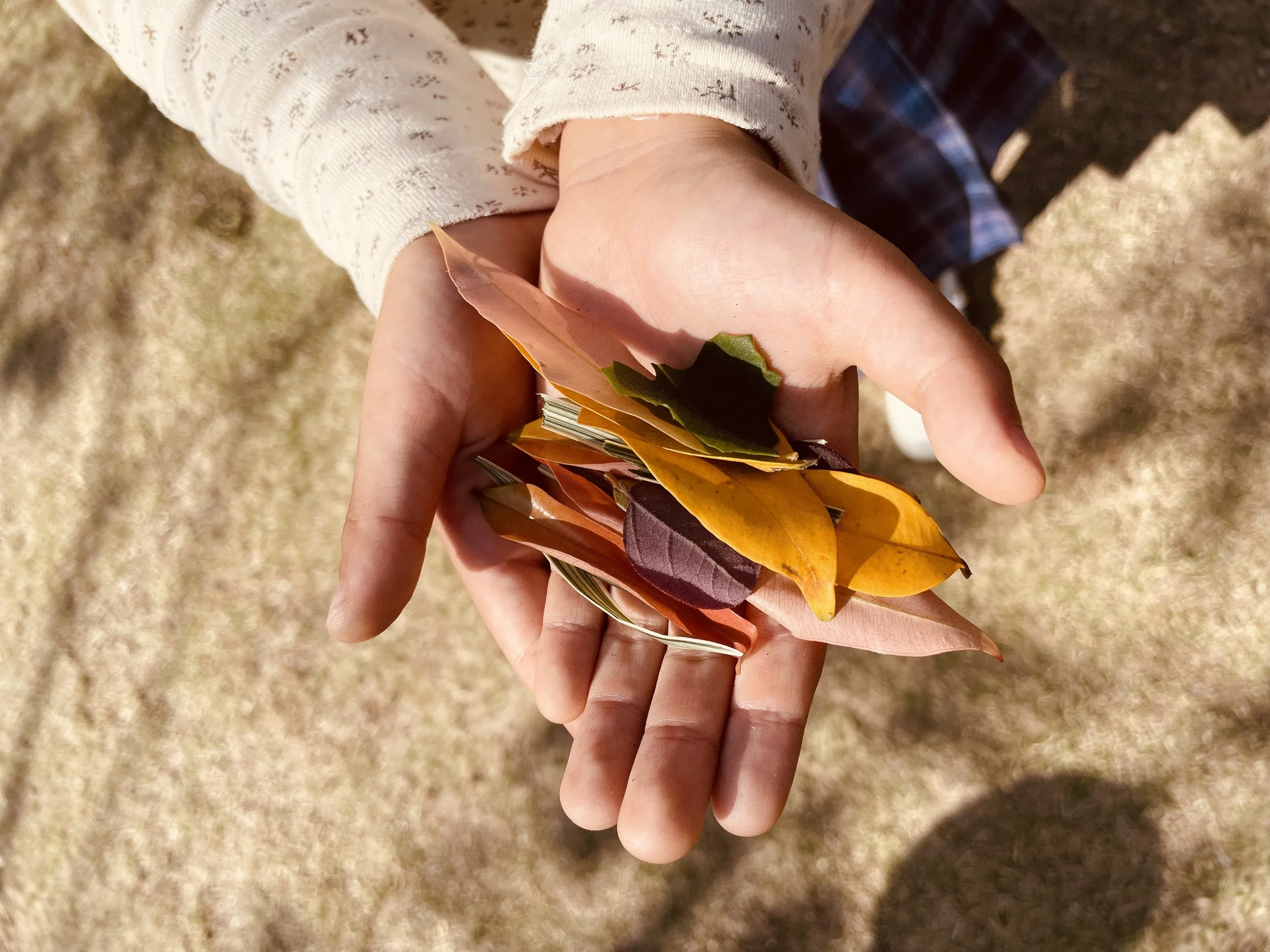
A plant that has changed while we were away. A colour in a leaf that catches a child’s attention. A comment made in passing. A ramp that keeps appearing in someone’s play. A mark that a child returns to again and again. I can still picture a girl showing me her scribbles and telling me that they were her name. I started to wonder:
Why do we search so far for ideas when there are already so many around us?
So many, in fact, that the challenge is not finding enough ideas, but deciding which ones are worth staying with.
But then what? These moments do not automatically turn themselves into the activity we desperately need for tomorrow.
Noticing alone is not what makes the difference. We return to them. We bring them back, make them visible again and see whether there is more to unfold. This might take the form of a conversation during circle time, an invitation in the environment, a reflection with children, or documentation displayed where they can encounter it again.
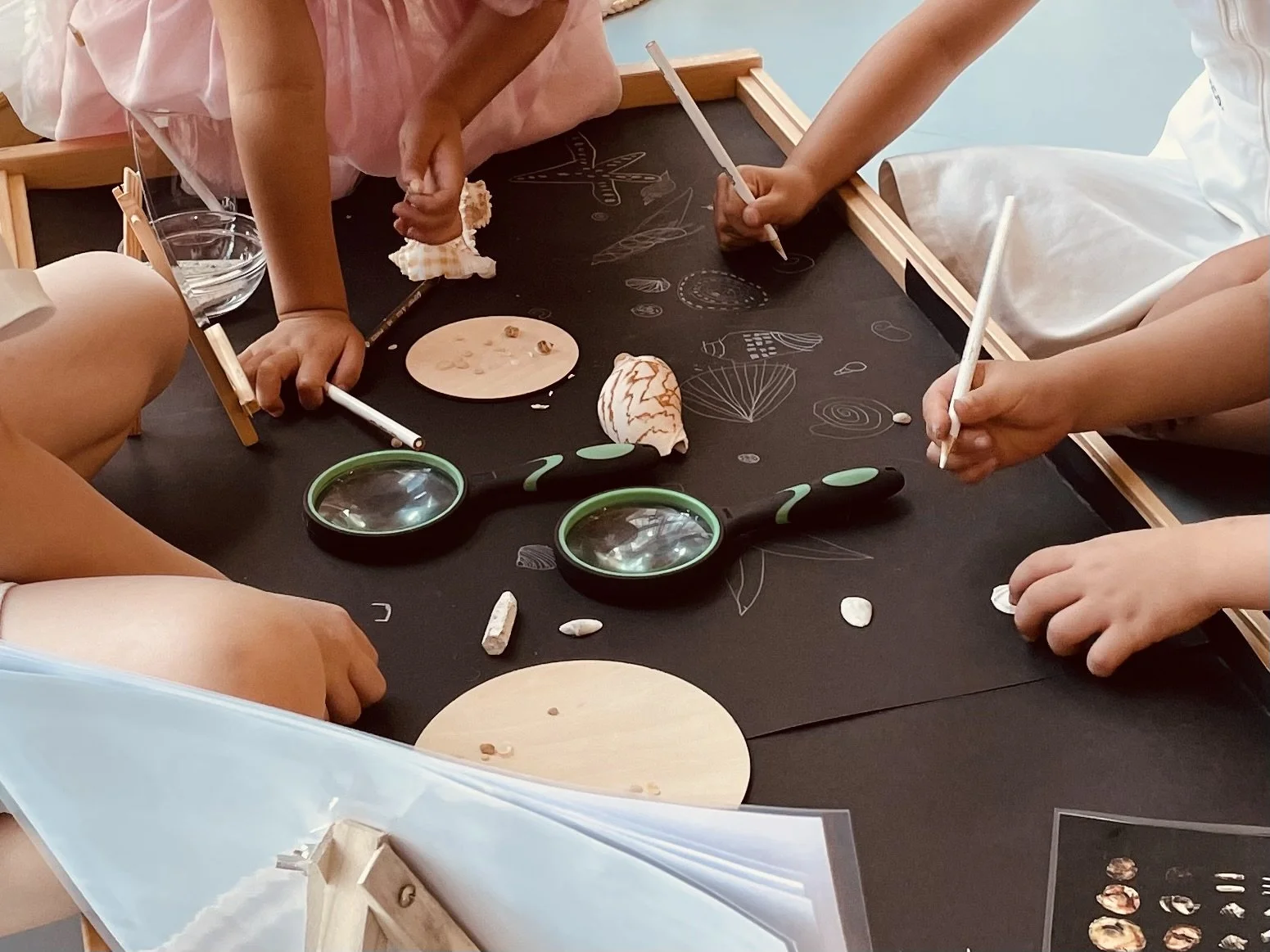
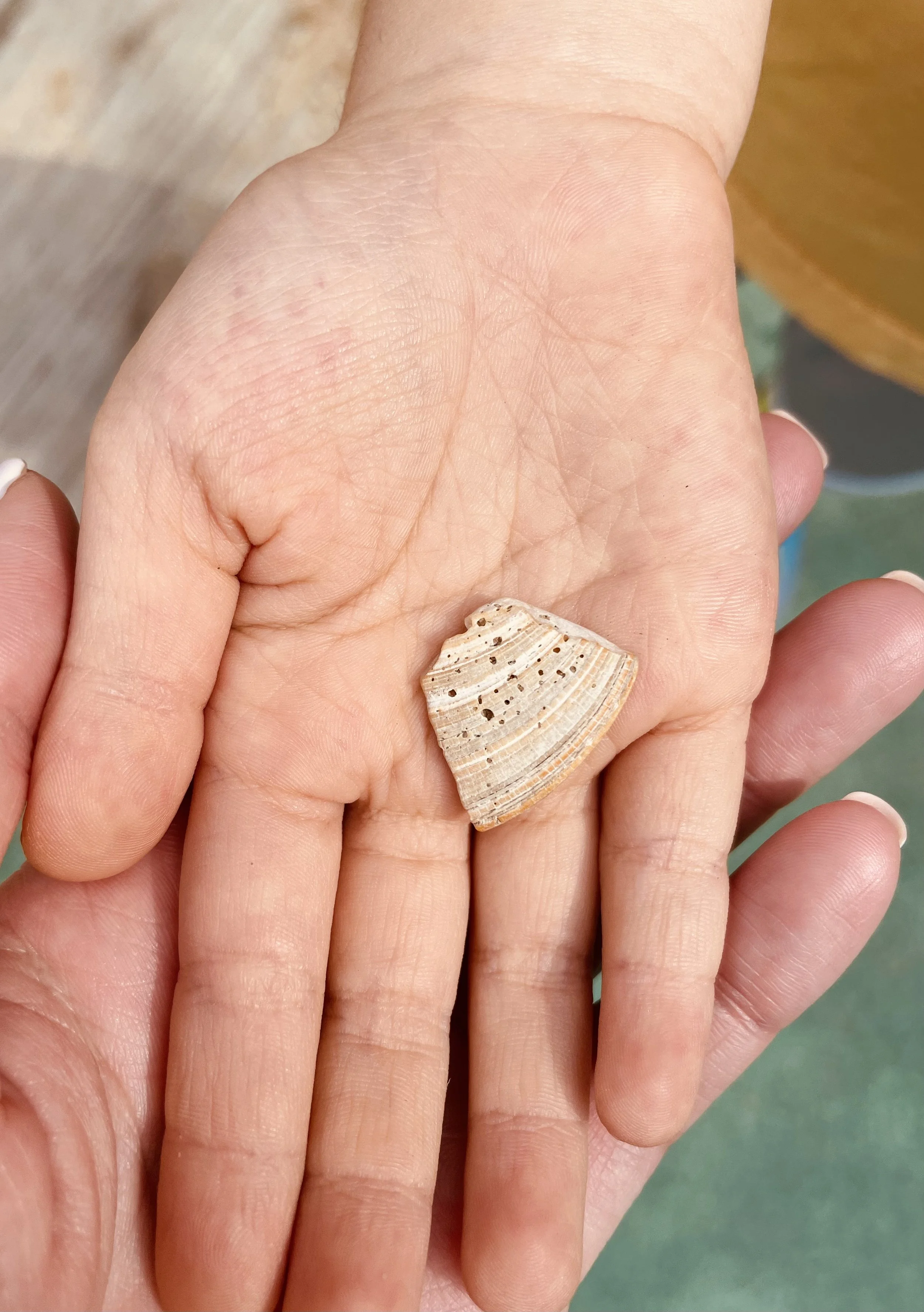
A shell discovered outdoors was brought back inside for closer observation and mark-making, allowing the discovery to continue beyond the moment it was found.
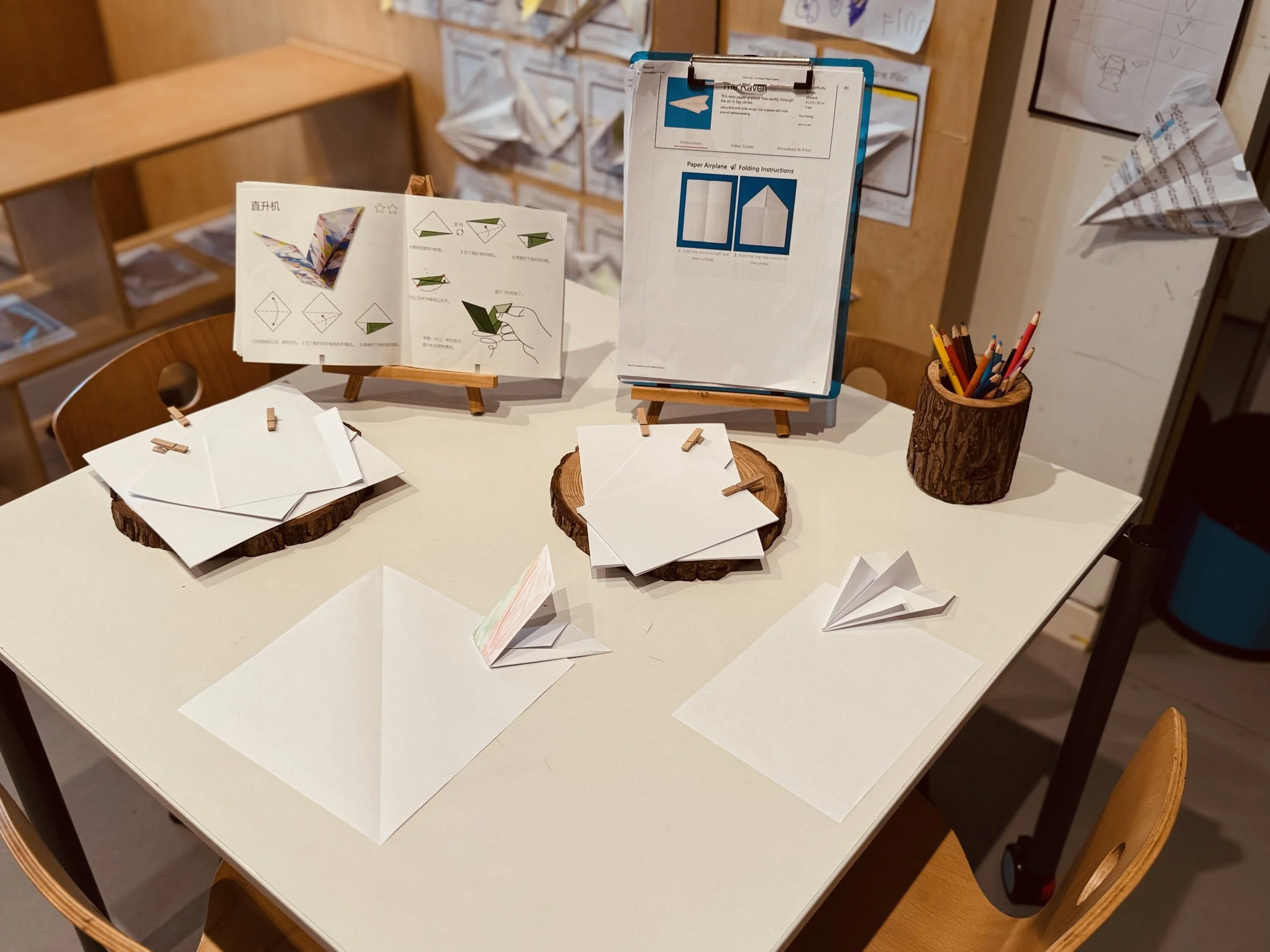
Noticing the children’s interest in paper aeroplanes led to a longer project of testing ideas and designs. Even after the project moved on, the space remained for those who were not yet finished with it.
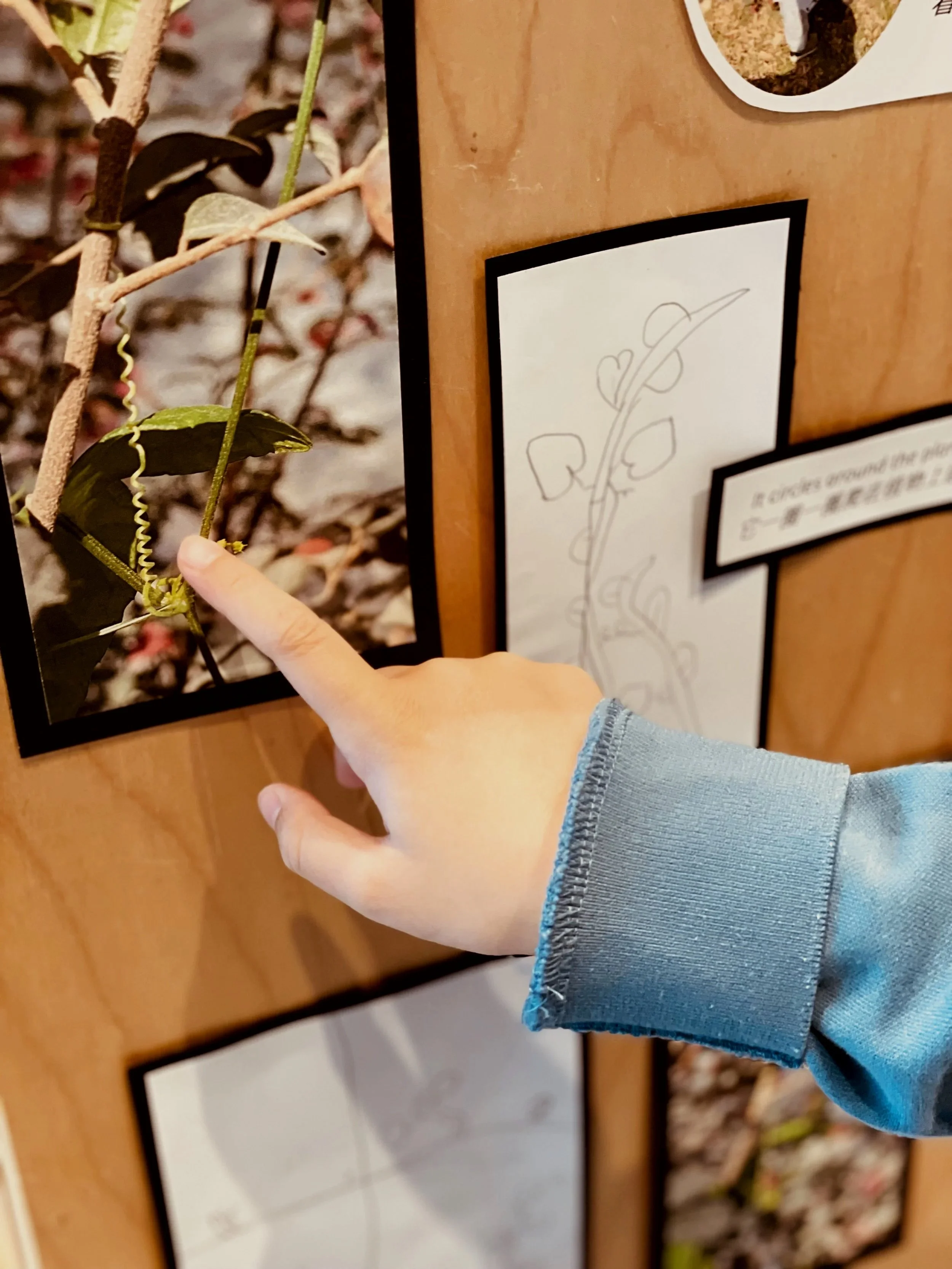
Displaying photographs and drawings from the morning’s enquiry allowed the children to return to it later. Here, one child shared what she had discovered with a friend.
When we choose to return, children have the opportunity to meet their own thinking again. They can remember what they did before and see it differently. They can change their minds, encounter another child’s interpretation or continue developing a technique just as they are beginning to understand how it works. An idea that could only go so far in one encounter is given more time.
Most of the time, it begins by just noticing a little more closely.
And instead of asking ourselves:
What new activity can I set up tomorrow?
We might ask:
What is already here that might be worth returning to?
Joanna, August 2026